





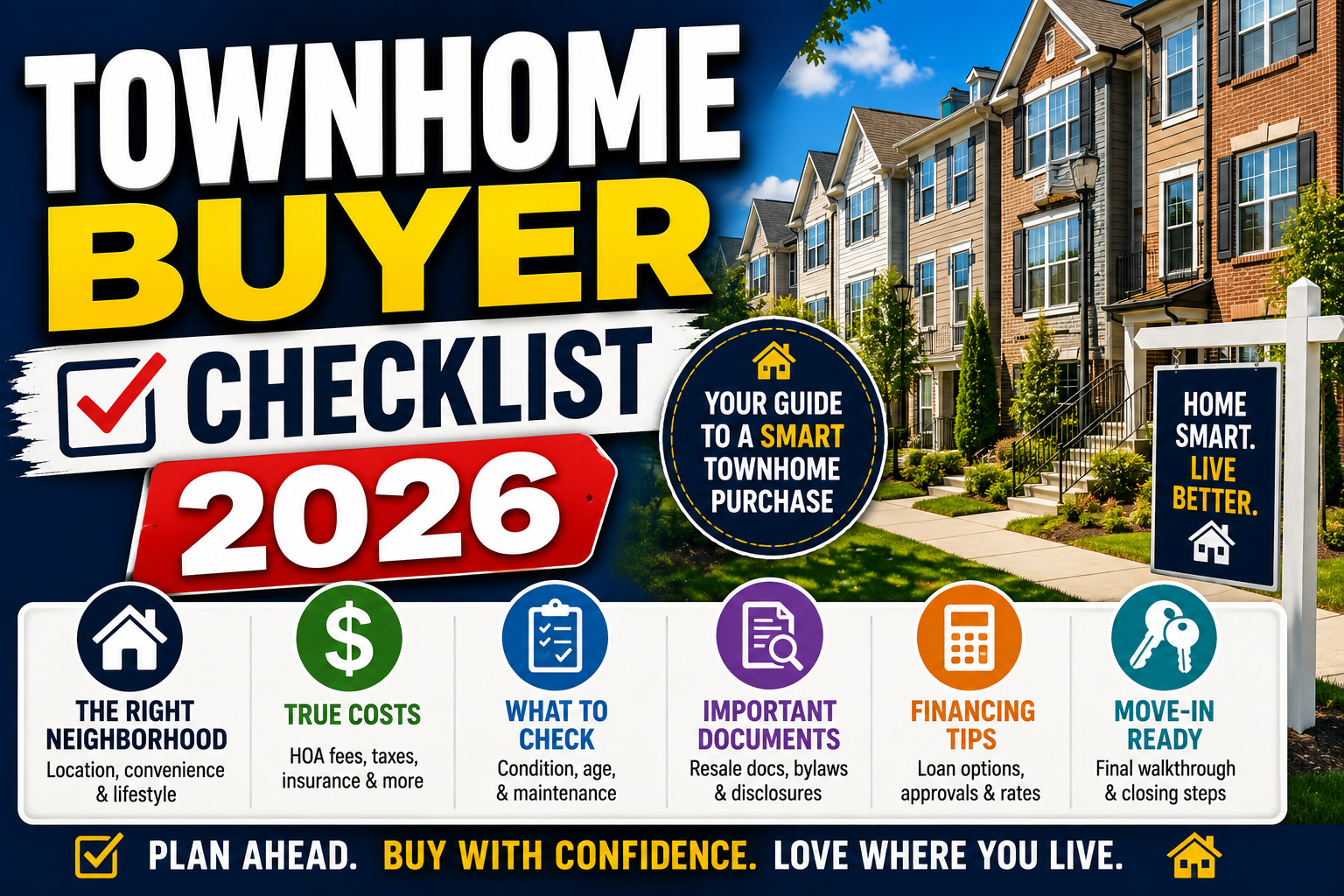

Thinking about buying a townhome in 2026 but not sure what actually separates a smart purchase from an expensive surprise? You are asking the right question at the right time. Townhomes remain one of the most practical entry points into homeownership because they typically offer more space than a condo and less exterior upkeep than a detached house, but the real risk is rarely in the floor plan. It lives in the HOA documents, the parking rules, the shared walls, and the reserve fund. This guide walks through what buyers actually need to check before writing an offer on a townhome. If you are weighing a purchase and want a clearer read on local values first, start with a free home valuation, or connect with Team DDA to talk through a specific townhome community before you commit.
Quick Facts Every Townhome Buyer Should Know in 2026
- HOA prevalence: roughly 53% of U.S. homeowners, about 40 million households, now live in an HOA-governed community
- National HOA count: approximately 370,000 community associations nationwide, with new ones forming daily
- Median HOA/condo fee: $135 per month nationally per U.S. Census Bureau data, though $250–$600+ is common in amenity-rich townhome communities
- Fee trend: national average fees have climbed toward $270–$355 per month across broader industry fee-report data, driven largely by insurance costs, labor, and deferred maintenance catching up
- Rental caps: many townhome associations limit rentals to roughly 10–25% of total units at any given time
- Most common HOA violations: landscaping issues (about 28% of citations), parking violations (about 18%), and unapproved architectural changes (about 15%)
- Super lien risk: in many states, unpaid HOA dues can create a lien that takes priority over a portion of even a first mortgage, meaning falling behind on dues carries real financial risk
These numbers matter because they show that HOA health, fee trends, and rule enforcement are not fine print. They are financial and lifestyle factors that belong in the offer decision itself.
Fee Simple vs. Condominium-Structured Townhomes
Before anything else, a buyer needs to understand what type of ownership the townhome actually offers, because this single distinction drives who pays for what for as long as you own the home.
Fee simple townhomes typically give the owner title to both the structure and the land beneath it. That generally means more control over exterior decisions, but it can also mean the owner is personally responsible for the roof, siding, windows, and other major exterior components when they wear out.
Condominium-structured townhomes usually limit ownership to the interior unit space, with the roof, exterior walls, and other structural elements treated as common elements controlled and maintained by the association. Monthly fees tend to run higher in this structure, but the tradeoff is that big-ticket exterior repairs are typically funded through the association rather than an individual owner's checkbook.
Neither structure is automatically better. A buyer who wants control and is comfortable handling repairs may prefer fee simple ownership. A buyer who wants predictable monthly costs and less hands-on maintenance may lean toward a condominium-structured community. The mistake is not asking the question at all.
HOA Rules to Review Before Making an Offer
HOA governing documents typically come in three layers, and each one matters differently:
- Covenants, Conditions, and Restrictions (CC&Rs): the foundational, recorded restrictions covering use, architectural control, and assessment authority
- Bylaws: how the association itself operates, including voting rights and board procedures
- Rules and regulations: day-to-day policies covering parking, pets, trash, noise, and exterior appearance, which boards can often revise more easily than the recorded covenants
Pay close attention to architectural approval requirements. Many associations require written approval before an owner can replace a front door, add a storm door, install exterior cameras, change exterior lighting, or add patio pavers. Landscaping standards, pet breed and weight limits, and holiday decoration timelines are also common sources of buyer surprise after closing.
Building a Townhome Parking Checklist
Parking looks easy during a daytime showing and can look very different on a weeknight or weekend. Before writing an offer, confirm:
- How many parking spaces come with the unit, and whether those spaces are deeded, HOA-assigned, or first-come
- Whether visitor parking requires a permit, has time limits, or is enforced with towing
- Whether commercial vehicles, trailers, RVs, or motorcycles are restricted
- Whether a municipal residential parking permit is required for street parking, and how many permits each household can receive
- Whether EV charging is currently allowed, and if not, what approval process exists to add it later
EV charging deserves particular attention heading into the back half of the 2020s. Confirm whether your assigned or deeded space can legally support a charger, who pays for the electrical work, and whether separate metering or added insurance is required.
Evaluating Shared Wall Noise Before You Buy
Shared walls are the defining feature of townhome living, and sound can travel through party walls, floor assemblies, outlets, and even shared attic space. A few practical steps can help:
- Identify which rooms in the home actually share a wall with a neighbor, and what is on the other side of that wall
- Visit at different times of day, including evenings and weekends, rather than relying on a quiet midday showing
- Ask about the age of construction and whether any soundproofing upgrades have been made
- Look for back-to-back electrical outlets on shared walls, which can allow sound to flank around the wall assembly
Layout often matters as much as construction quality. A primary bedroom that shares a wall with a neighbor's staircase, kitchen, or living room is more exposed to daily noise than one buffered by a closet, bathroom, or garage.
Storage Solutions: What a Townhome Really Offers
Townhomes often trade horizontal square footage for vertical living, which can quietly limit storage. Before buying, walk through the home with a storage-specific checklist:
- Can a vehicle and everyday gear actually both fit in the garage, or does the garage function as the primary storage room?
- Is the attic finished, insulated, and accessible, or limited by fire-separation rules?
- Are bedroom closets deep enough for daily use, and is there a pantry beyond kitchen cabinets?
- Are patios, decks, or balconies allowed to hold visible storage, bikes, or a deck box, or does the HOA restrict it?
Outdoor storage rules are often stricter than buyers expect. Many associations prohibit visible bins, sheds, and firewood on patios and decks, or only allow screened storage that meets specific size and color standards.
HOA Fees, Reserves, and Special Assessment Risk
An HOA fee is not just a monthly line item; it is a signal of how well the community is funded for the future. A low fee paired with an aging roof, weak reserves, and a history of deferred maintenance is a bigger red flag than a higher fee attached to a well-funded reserve study.
Before removing contingencies, request and review:
- The current operating budget and reserve study
- Recent or planned special assessments
- Delinquency rates among owners
- Board meeting minutes for recurring maintenance complaints
- Insurance coverage and deductible responsibility
Industry guidance generally treats a reserve fund at 70% or more of its target as healthy, while anything meaningfully below 50% signals a real risk of a future special assessment or a sharp fee increase. Special assessments in poorly reserved communities have run from a few thousand dollars per unit into six figures for major structural repairs, so this step is not optional due diligence.
Resale Disclosure Documents Deserve a Real Read
The resale disclosure package is one of the most useful documents a townhome buyer receives, and many states provide a limited review window during which a buyer can cancel the contract based on what the documents reveal. Look specifically for open violations tied to the property, unapproved past modifications, rental caps, pet restrictions, pending litigation, and the association's fee history. An open violation from a prior owner, such as an unapproved deck or unpermitted window replacement, can become the new owner's problem if it is not resolved before settlement.
Maintenance Responsibilities: Confirm Who Fixes What
Because responsibility depends entirely on the governing documents rather than assumption, build a simple maintenance map before buying: who repairs and replaces the roof, who maintains siding and exterior trim, who is responsible for windows and doors, and who handles driveways, walkways, and snow removal on shared spaces. Some communities split these responsibilities in ways that surprise buyers, such as an HOA that maintains the roof but leaves window replacement entirely to the owner.
Rental Restrictions and Lifestyle Rules
Even buyers with no current plans to rent their townhome should check leasing rules, because life circumstances change. Many associations cap the share of units that can be rented at any one time, commonly in the 10–25% range, and may also require minimum lease terms, tenant registration, or board approval. Pet rules, home-based business restrictions, and quiet hours round out the lifestyle policies worth reading closely, particularly for buyers with pets, remote-work routines, or frequent guests.
Fire Safety and Structural Basics Worth an Inspector's Attention
Because townhomes are attached, fire-rated wall separation between units matters more than it would in a detached home. Ask your inspector to check garage-to-living-space separation, self-closing doors between an attached garage and the interior, visible fire separation in shared attic or crawlspace areas, and any signs of unpermitted alterations that could compromise that separation.
The Smart Townhome Buyer Checklist at a Glance
| Category | What to Verify |
|---|---|
| Ownership Type | Fee simple vs. condominium-structured, and who owns what |
| HOA Rules | CC&Rs, bylaws, and day-to-day rules and regulations |
| Parking | Assigned spaces, visitor policy, permits, towing, and EV charging |
| Noise | Shared wall locations, construction age, and layout |
| Storage | Garage, attic, closets, and outdoor storage restrictions |
| Financial Health | Reserve study, budget, delinquency rate, and litigation |
| Resale Documents | Violations, fee history, rental caps, and pet rules |
Frequently Asked Questions About Buying a Townhome in 2026
Is buying a townhome in 2026 a good idea? It can be, particularly for buyers who want more room than a condo and less exterior maintenance than a detached home. The outcome depends heavily on reviewing HOA rules, reserve health, and parking policy before closing rather than after.
What is the average HOA fee for a townhome? The Census Bureau's national median HOA or condo fee is $135 per month, but amenity-rich townhome communities commonly run $250 to $600 or more, and broader fee-report data puts the national average closer to $270–$355 per month as insurance and labor costs rise.
What is the difference between fee simple and condominium-structured townhome ownership? Fee simple ownership typically includes the structure and land, putting more repair responsibility on the owner. Condominium-structured ownership usually limits ownership to the interior unit while the association maintains and funds exterior and structural components through fees and reserves.
How can I tell if a townhome will be noisy? Identify which rooms share a wall with a neighbor, visit the property at different times of day, and ask about construction age and any soundproofing upgrades. Bedrooms that share a wall with a neighbor's staircase, kitchen, or living space tend to be more exposed to daily noise.
What should I check in the HOA reserve study? Look at the reserve funding percentage relative to upcoming major repairs like roofs and paving. A reserve funded at 70% or more of target is generally considered healthy, while funding meaningfully below 50% raises the risk of a future special assessment.
Can I install an EV charger in a townhome community? It depends on whether your parking space is deeded, assigned, or shared, along with HOA approval rules, electrical capacity, and metering requirements. Confirm feasibility before closing even if you do not currently own an EV.
The Bottom Line for 2026 Townhome Buyers
A townhome can be one of the most practical purchases in today's market, but the properties that turn into headaches are almost always the ones where a buyer skipped the paperwork to focus on finishes. Reading the HOA documents, checking the reserve study, mapping out parking and storage, and listening for shared wall noise before removing contingencies is what separates a smooth purchase from a costly one. If you are actively comparing townhome communities or want a clearer sense of what a specific property is really worth, get a free home valuation or reach out to Team DDA for local, document-first guidance before you make an offer.

WHY CHOOSE TEAM DDA FOR REAL ESTATE IN NORTHERN VIRGINIA?
When you are buying or selling a home in Northern Virginia, the Realtor you choose matters. You need more than someone who can open doors or put a sign in the yard. You need a trusted real estate team with proven results, deep local knowledge, strong negotiation skills, and a track record of helping clients move with confidence.
Debbie Dogrul Associates, also known as Team DDA, is one of Northern Virginia’s most trusted real estate teams and the number one eXp Realty team in Virginia. For decades, our full-service team has helped families buy, sell, relocate, invest, and make smart real estate decisions across Fairfax County and the surrounding Northern Virginia region.
With over 540 homes sold annually, nearly $400 million in 2025 sales volume, and 2,030 plus five-star reviews, Team DDA delivers the kind of experience, strategy, and results today’s buyers and sellers deserve.
A TOP NORTHERN VIRGINIA REAL ESTATE TEAM WITH PROVEN RESULTS
Choosing the right real estate agent can make a major difference in your final outcome. For sellers, that can mean stronger marketing, better pricing, more qualified buyers, and a smoother path to closing. For buyers, it can mean finding the right home, writing a competitive offer, avoiding costly mistakes, and understanding the local market before making a move.
Team DDA brings together more than 35 full-time, highly trained Realtors who specialize in helping clients throughout Northern Virginia. Our team approach gives every client access to local market expertise, professional marketing, negotiation strategy, transaction support, staging guidance, vendor connections, and clear communication from start to finish.
Whether you are looking for the best Realtor in Fairfax County, a top real estate agent in Northern Virginia, or an experienced team to help you sell your home, Team DDA has the systems, people, and local experience to guide you with confidence.
LOCAL EXPERTISE ACROSS FAIRFAX COUNTY AND NORTHERN VIRGINIA
Real estate is local. Pricing, buyer demand, school boundaries, commute patterns, neighborhood amenities, and even street-by-street trends can all affect your home’s value and your buying power.
Team DDA proudly serves communities throughout Northern Virginia, including:
Fairfax, Burke, Annandale, Springfield, Alexandria, Arlington, Reston, Herndon, McLean, Tysons, Vienna, Falls Church, Oakton, Fairfax Station, Woodbridge, Centreville, Chantilly, Ashburn, Loudoun County, Prince William County, and surrounding areas.
Our agents understand the neighborhoods, housing styles, market trends, and buyer expectations that shape each local community. Whether you are selling a single-family home in Burke, buying a townhouse in Springfield, relocating to Fairfax, searching for a luxury home in McLean, or preparing to list a property in Reston, our team provides hyperlocal guidance tailored to your goals.
HELPING NORTHERN VIRGINIA SELLERS GET BETTER RESULTS
Selling a home in Northern Virginia takes more than uploading photos online. It requires accurate pricing, strategic preparation, strong presentation, professional marketing, expert negotiation, and a clear plan from day one.
Team DDA helps sellers maximize their home’s value through:
• Local pricing strategy based on real market data
• Professional staging guidance and home preparation advice
• High-quality photography and marketing exposure
• Digital marketing designed to reach serious buyers
• Skilled negotiation to protect your equity
• Clear communication throughout the selling process
• Full-service transaction support from listing to closing
Our goal is simple. We help you sell with confidence, reduce stress, and position your home to stand out in the Northern Virginia market.
HELPING BUYERS MAKE SMART MOVES
Buying a home in Northern Virginia can be competitive, especially in sought-after areas like Fairfax, Burke, Vienna, Arlington, Alexandria, McLean, Reston, and Falls Church. Having the right buyer’s agent can help you move quickly, understand market value, write a stronger offer, and avoid surprises along the way.
Team DDA helps buyers with:
• Local neighborhood guidance
• Home search strategy
• Market value analysis
• Offer preparation and negotiation
• Inspection and contingency guidance
• Lender and vendor recommendations
• Closing support and next-step planning
Whether you are a first-time homebuyer, moving up, downsizing, relocating, or investing, our team helps you make informed decisions every step of the way.
WHY CLIENTS SEARCH FOR TEAM DDA
Many clients find us while searching for terms like best Realtor near me, top real estate agent in Fairfax VA, Northern Virginia real estate team, Fairfax County Realtor, Realtor in Burke VA, real estate agent in Springfield VA, top Realtor in Arlington VA, best listing agent in Northern Virginia, or trusted Realtor near Tysons.
But what keeps clients choosing Team DDA is not just search visibility. It is our reputation, our results, and the way we care for people throughout the entire process.
Our clients trust us because we combine professional systems with personal service. We know how important your move is, and we treat it with the attention, preparation, and strategy it deserves.
A REAL ESTATE TEAM BUILT ON SERVICE AND COMMUNITY
At Team DDA, success is about more than homes sold. It is also about giving back to the communities that have supported us for decades.
Through the DDA Love Foundation, Team DDA supports local families, students, nonprofits, and community organizations throughout Northern Virginia and beyond. In 2025, our team partnered with Palmetto International Missions to help build 15 homes in a village in Honduras and awarded scholarships to five local high school seniors. In total, Team DDA contributed more than $100,000 in community giving.
Our outreach also includes food drives for Food for Others, support for The Lamb Center, Thanksgiving meal distributions, Adopt a Family programs, clothing drives, blood drives with Inova, community cleanup days, and other local service initiatives.
We believe real estate is about people, families, neighborhoods, and futures. That belief shapes how we serve our clients and how we show up for our community.
WORK WITH ONE OF NORTHERN VIRGINIA’S MOST TRUSTED REAL ESTATE TEAMS
If you are thinking about buying or selling a home in Northern Virginia, Team DDA is here to help you move forward with clarity and confidence.
From Fairfax County to Arlington, Alexandria, Loudoun County, Prince William County, and the surrounding communities, Debbie Dogrul Associates brings the experience, local knowledge, marketing power, and personal care you need when it matters most.
Whether you are searching for the best Realtor near you, preparing to sell your home, or looking for expert guidance in today’s Northern Virginia real estate market, Team DDA is ready to help.
Contact Team DDA today to start your next move with one of Northern Virginia’s top real estate teams.
Check out this article next