




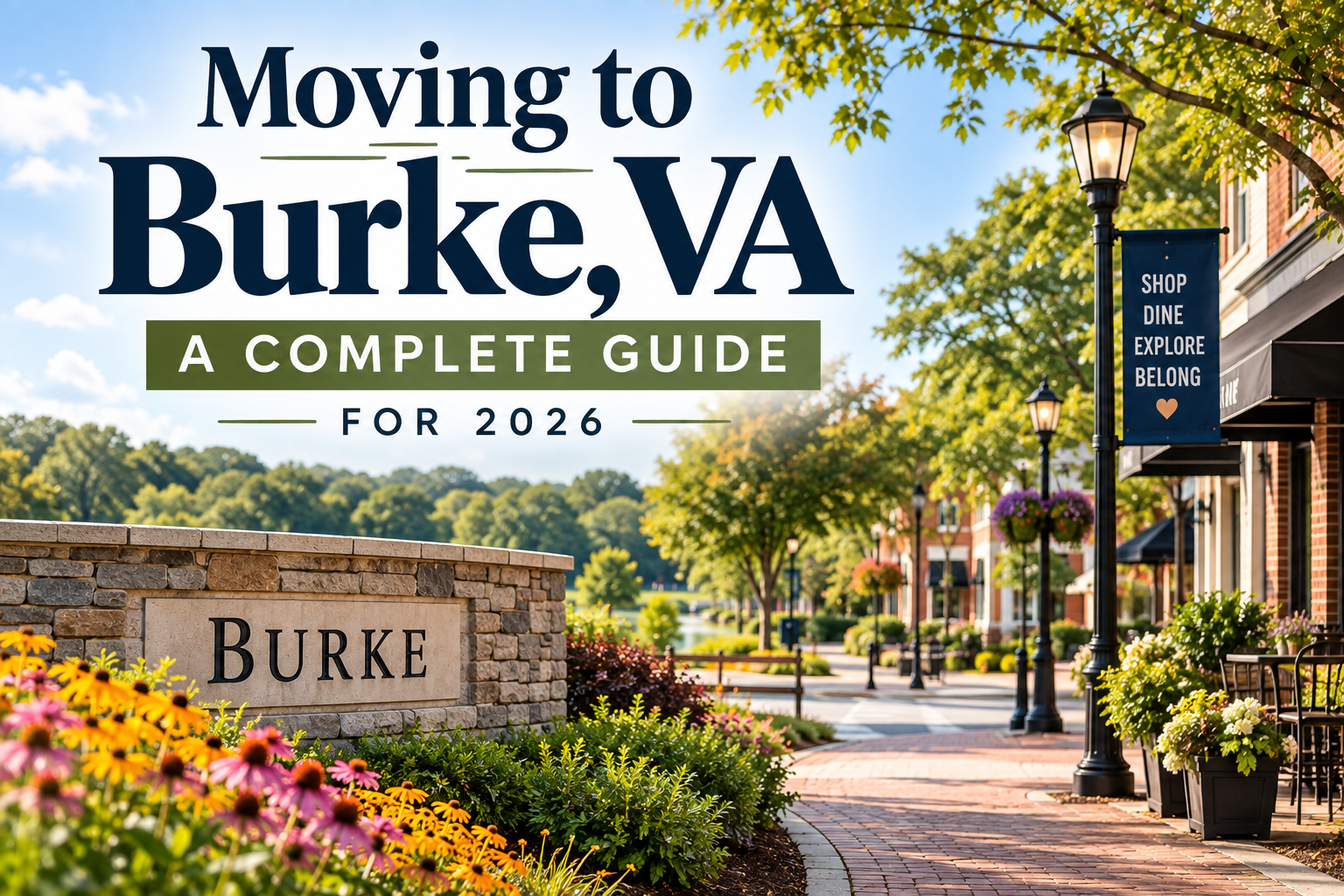
Burke occupies a distinct spot on the Northern Virginia map. It is suburban without feeling disconnected, established without feeling stagnant, and close enough to major job centers that commuting stays realistic, all while offering meaningfully more house and yard than many communities closer to the Beltway. This guide breaks down what buyers actually need to know before moving to Burke, from neighborhoods and home prices to schools, commuting, and the real cost of ownership. If you are weighing Burke against other parts of Fairfax County, start with a free home valuation, or connect with Team DDA to talk through whether Burke fits your budget and lifestyle.
Quick Facts About Living in Burke, VA
- Burke sits roughly 18 to 21 miles southwest of downtown Washington DC, with a population of approximately 60,000 across the broader Burke and Burke Centre area
- Homeownership in the Burke area runs around 85%, well above the national average, reflecting a stable, low-turnover community
- Burke home prices span a wide range, from condos in the mid $300,000s up to executive homes exceeding $1.5 million
- Most of Burke's housing stock was built between roughly 1970 and 1985, meaning condition and system age matter as much as price and layout
- Burke does not have a Metrorail station, but two Virginia Railway Express stations, Burke Centre and Rolling Road, connect residents to Alexandria, Crystal City, L'Enfant Plaza, and Union Station
- Burke Lake Park spans approximately 888 acres around a 218-acre reservoir, with a 4.7-mile trail circling the lake
- Robinson Secondary School and Lake Braddock Secondary School are the two primary Fairfax County Public Schools campuses serving the Burke area
- Burke Centre, the area's largest master-planned community, covers roughly 1,700 acres across five neighborhoods with community pools, trails, and its own conservancy rules
Burke's Location and Suburban Character
Burke sits within reach of several major Northern Virginia employment centers without placing residents in the region's densest corridors. Tysons is roughly 12 to 14 miles north, the Pentagon and Crystal City sit about 15 to 17 miles northeast, and Fort Belvoir is approximately 12 to 15 miles southeast. That positioning shapes the physical feel of the area, with tree-lined residential roads, established subdivisions, lakes, trails, and neighborhood shopping plazas rather than a dense downtown core.
For buyers comparing Burke to Arlington or Alexandria, this is the central tradeoff. Arlington and Alexandria generally offer stronger walkability and closer Metrorail access, while Burke generally offers more house and more outdoor space for a comparable budget.
Home Prices and Housing Types in Burke
Burke's housing market spans several distinct tiers rather than a single price point. Garden condominiums, found in communities like Burke Cove and Woodwalk, typically run 800 to 1,400 square feet and price between roughly $350,000 and $475,000, offering the most accessible entry point into the area. Townhomes generally provide 1,200 to 2,400 square feet across two or three levels, often with finished basements and fenced rear yards, priced from about $475,000 to $725,000.
The bulk of Burke's detached housing falls between $750,000 and $950,000, typically offering four or five bedrooms, a garage, and a quarter to a third of an acre. At the top of the market, larger homes around Lake Braddock and in Longwood Knolls can range from roughly $950,000 to $1.8 million, offering 3,500 to 5,000 or more square feet on larger wooded lots.
Because so much of Burke's housing dates back to the 1970s and 1980s, condition plays an outsized role in value. A renovated colonial and an original-condition colonial with the same bedroom count and square footage can trade very differently, with updated electrical service, replacement windows, newer roofs, and finished basements commanding real premiums.
Burke's Neighborhoods: What Sets Each One Apart
Burke Centre is the community most relocation buyers encounter first. Chartered in 1976, this roughly 1,700-acre master-planned community is organized into five neighborhoods, each with its own community center and pool, alongside approximately 30 miles of paved trails, playgrounds, and tennis and pickleball courts. The tradeoff is governance. Burke Centre Conservancy rules regulate many exterior changes, including paint colors and roofing materials, and master assessments generally run $260 to $320 per quarter, with some townhome clusters carrying additional fees.
Lake Braddock, developed starting in 1969, centers on a private 27-acre lake and includes roughly 1,298 homes split between detached properties and townhomes. Residents have access to community pools, sports courts, a lakeside trail, and private boat access, with housing ranging from townhomes and brick colonials to distinctive cedar-clad contemporary homes in the Raintree area.
Rolling Valley and Rolling Valley West appeal to buyers who prefer fewer association restrictions, with significant sections operating under voluntary civic associations or no mandatory HOA at all. Housing here is primarily detached, with colonials and split-levels on quarter to third-acre lots.
Longwood Knolls sits toward the higher end of Burke's price range, offering larger single-family homes, mature landscaping, and lower turnover, with many properties exceeding 3,500 square feet.
Schools Serving the Burke Area
Burke falls within Fairfax County Public Schools, with most of the area feeding into either Robinson Secondary School or Lake Braddock Secondary School, both serving grades 7 through 12. Robinson offers International Baccalaureate and Advanced Placement coursework alongside strong athletics and fine arts programs, with elementary feeders including Terra Centre, Fairview, Bonnie Brae, and Laurel Ridge. Lake Braddock Secondary offers an extensive AP program along with a Spanish immersion track, fed by schools including Cherry Run, Burke School, and the paired Kings Park and Kings Glen elementary schools.
Because some boundaries split by exact address, including portions of Oak View and Sangster, buyers should never rely on a listing description alone. Confirming the exact school assignment directly through Fairfax County Public Schools before writing an offer is essential, since two homes on the same street can sometimes feed different secondary schools. Burke students may also be eligible to apply to Thomas Jefferson High School for Science and Technology, though admission remains competitive and is never guaranteed by address.
Commuting From Burke to DC, Tysons, and Beyond
Burke's biggest transportation distinction is what it lacks: a direct Metrorail station. Instead, the area relies on the Virginia Railway Express Manassas Line, highway corridors, express buses, and park and ride facilities. The Burke Centre VRE station includes a large parking facility with roughly 1,500 spaces and connects riders to Alexandria, Crystal City, L'Enfant Plaza, and Union Station, with a travel time of about 43 minutes to L'Enfant Plaza. The nearby Rolling Road station offers another rail option for residents in eastern Burke.
For drivers, Fairfax County Parkway serves as the area's major north-south spine, connecting Burke toward I-66, Route 50, and the Dulles corridor to the north and I-95 and Fort Belvoir to the south. Old Keene Mill Road and Braddock Road provide routes toward Springfield and I-395, while Route 123 offers access toward Tysons. Commute times vary significantly by destination and time of day, and peak period congestion can meaningfully extend a trip that takes 25 minutes off-peak into an hour or more during rush hour. Testing the actual commute at the time you would be driving it, rather than relying on an off-peak estimate, remains one of the most valuable steps a buyer can take before committing to a specific Burke neighborhood.
Parks, Trails, and Everyday Lifestyle in Burke
Burke's strongest lifestyle asset is its outdoor recreation. Burke Lake Park anchors the area at approximately 888 acres surrounding a 218-acre reservoir, with a 4.7-mile trail circling the lake alongside a marina, boat and kayak rentals, an 18-hole par-3 golf course, disc golf, camping, and a miniature train and carousel that make it a genuine draw for families. Hidden Pond Nature Center adds roughly 25 acres of preserved forest, wetlands, and boardwalk trails, while the Gerry Connolly Cross-County Trail extends more than 40 miles across Fairfax County, linking Burke's trail network to the broader region.
Daily shopping is convenient but car dependent. Burke Centre Shopping Center, Burke Town Plaza, and Rolling Valley Mall cover groceries, medical offices, and everyday needs, with residents typically driving to Springfield Town Center, Fair Oaks Mall, or Tysons Corner Center for broader retail and dining options. Burke is not designed around walkable urban density, which suits buyers prioritizing trails, yard space, and quieter streets more than those seeking a walk-everywhere lifestyle.
The Real Cost of Living in Burke
Beyond the purchase price, Burke buyers should budget for several recurring costs. Fairfax County assesses real estate annually at market value, with a combined effective rate commonly landing between roughly $1.125 and $1.155 per $100 of assessed value, putting the annual tax bill on an $850,000 home in the range of $9,560 to $9,815. Virginia's personal property tax on vehicles, commonly called the car tax, adds another layer, typically assessed at a rate that can bring the annual cost for a household with newer vehicles into the hundreds or low thousands of dollars, a real adjustment for buyers relocating from states without an annual vehicle tax.
HOA and association costs vary meaningfully by neighborhood. Burke Centre's master assessment generally runs $260 to $320 per quarter, with some townhome clusters layering on additional monthly fees of roughly $80 to $220 for shared landscaping, snow removal, or common areas. Buyers should review the full resale disclosure package, reserve study, and any open violations before a contract's contingency period expires, rather than discovering financial or governance surprises after closing.
Why Buyers Choose Burke Over Closer-In Communities
Burke's clearest advantage is space per dollar. Homes in Burke have historically traded at a noticeably lower price per square foot than comparable properties in Arlington, allowing a similar budget to stretch into additional bedrooms, a finished basement, garage parking, and a larger yard rather than a smaller unit closer to Washington. That tradeoff appeals strongly to growing families who want more room to spread out without leaving Fairfax County's school system and job access behind.
The compromise is equally real. Larger, older homes generally come with larger roofs, more windows, and bigger HVAC systems to eventually replace, and the lack of a Metrorail station means most households remain car dependent for daily errands even with strong VRE access for commuting. Buyers who go in understanding both sides of that equation tend to be the happiest long-term Burke homeowners.
Frequently Asked Questions About Moving to Burke, VA
Is Burke, VA a good place to live? Burke works well for buyers who want an established suburban setting with larger homes, mature trees, strong parks and trails, and Fairfax County schools, paired with commuter rail access to DC. The main tradeoffs are a car-dependent daily routine and no direct Metrorail station.
Does Burke have a Metro station? No. Burke does not have a Metrorail station. Residents typically drive to nearby stations like Vienna or Franconia-Springfield, or use the Burke Centre and Rolling Road VRE stations for commuter rail service into DC.
What are the best neighborhoods in Burke? Burke Centre offers the most amenities and community structure, Lake Braddock provides private lake access, Rolling Valley and Rolling Valley West appeal to buyers wanting fewer HOA restrictions, and Longwood Knolls offers larger homes at a higher price point. The right choice depends on budget, HOA tolerance, and lifestyle preferences.
How old are homes in Burke? Most of Burke's housing stock was built between approximately 1970 and 1985, meaning buyers should pay close attention to the age of roofs, HVAC systems, electrical panels, and windows during inspection rather than assuming systems are new.
What schools serve Burke, VA? Most of Burke feeds into Robinson Secondary School or Lake Braddock Secondary School, both part of Fairfax County Public Schools. Because boundaries can split by exact address, buyers should confirm school assignments directly with FCPS before purchasing.
Is Burke expensive? Burke is expensive relative to national averages but generally more affordable per square foot than closer-in Northern Virginia communities like Arlington or McLean, making it appealing for buyers who want more space for their budget while staying within Fairfax County.
The Bottom Line on Moving to Burke, VA
Burke is not trying to be an urban substitute for Arlington or Alexandria. It offers a different equation entirely: larger homes, mature neighborhoods, strong parks and trail access, two VRE stations, and established Fairfax County schools, in exchange for greater car dependence and a housing stock that generally requires closer inspection due to its age. Buyers who verify school boundaries, review HOA documents carefully, and test their actual commute before buying tend to find Burke a genuinely strong long-term fit. If you are weighing Burke against other Fairfax County communities, get a free home valuation or reach out to Team DDA to talk through your options.

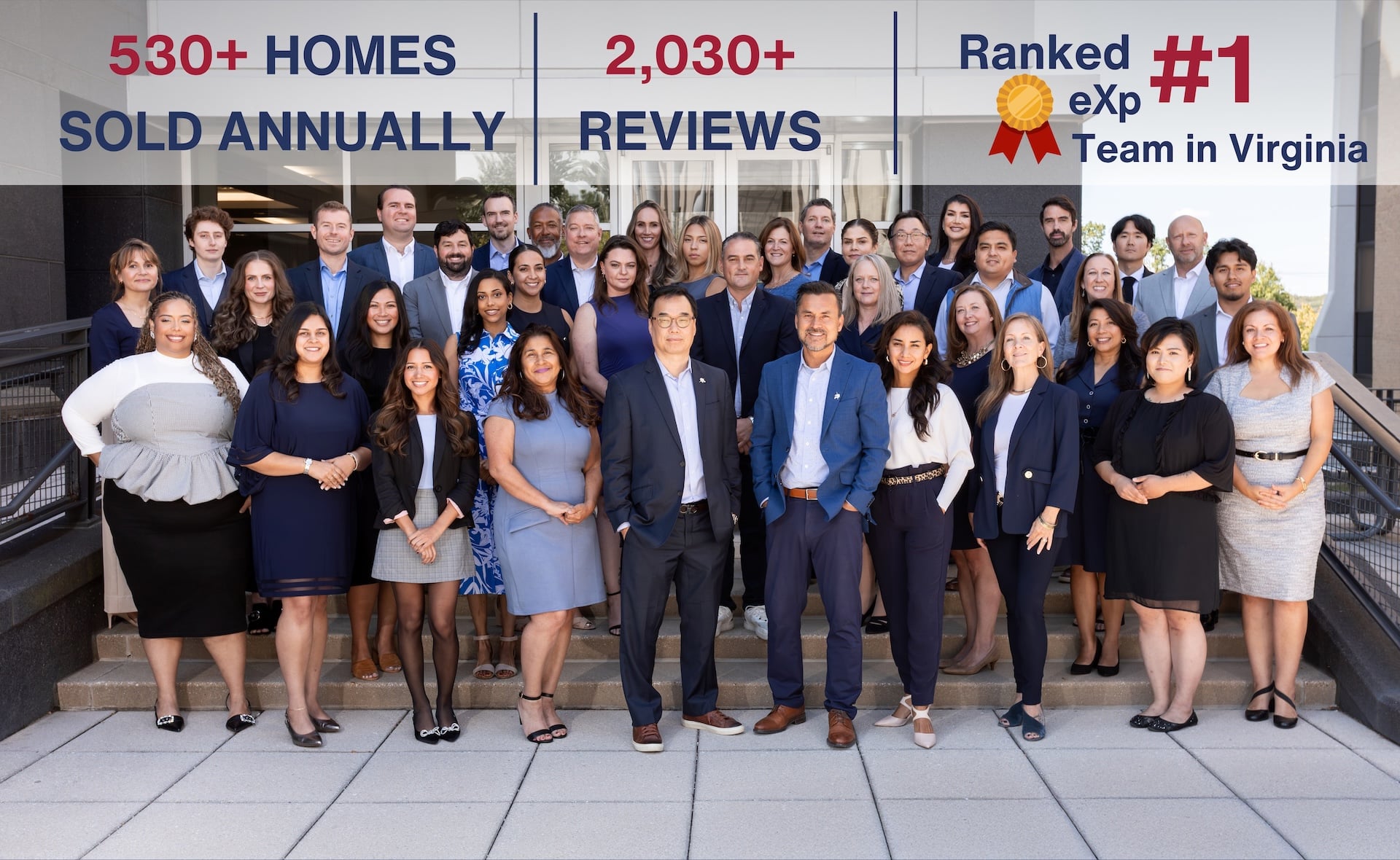
Debbie Dogrul Associates, known as Team DDA, is the number one eXp Realty team in Virginia and one of Northern Virginia's most trusted real estate teams. With more than 35 full-time Realtors, over 540 homes sold annually, nearly $400 million in 2025 sales volume, and 2,030+ five-star reviews, Team DDA brings deep local expertise to Fairfax County, Arlington, Alexandria, Loudoun County, Prince William County, and communities across Northern Virginia including Burke, Vienna, Reston, McLean, Tysons, Herndon, and Springfield. From pricing strategy and professional marketing for sellers to offer negotiation and closing support for buyers, our full-service approach is built to help clients move with confidence in a competitive market. Beyond real estate, Team DDA gives back through the DDA Love Foundation, contributing more than $100,000 in 2025 to local families, students, and nonprofits across the region.
Ready to make your next move? Get a free home valuation or connect with Team DDA to work with one of Northern Virginia's top real estate teams.
Check out this article next