





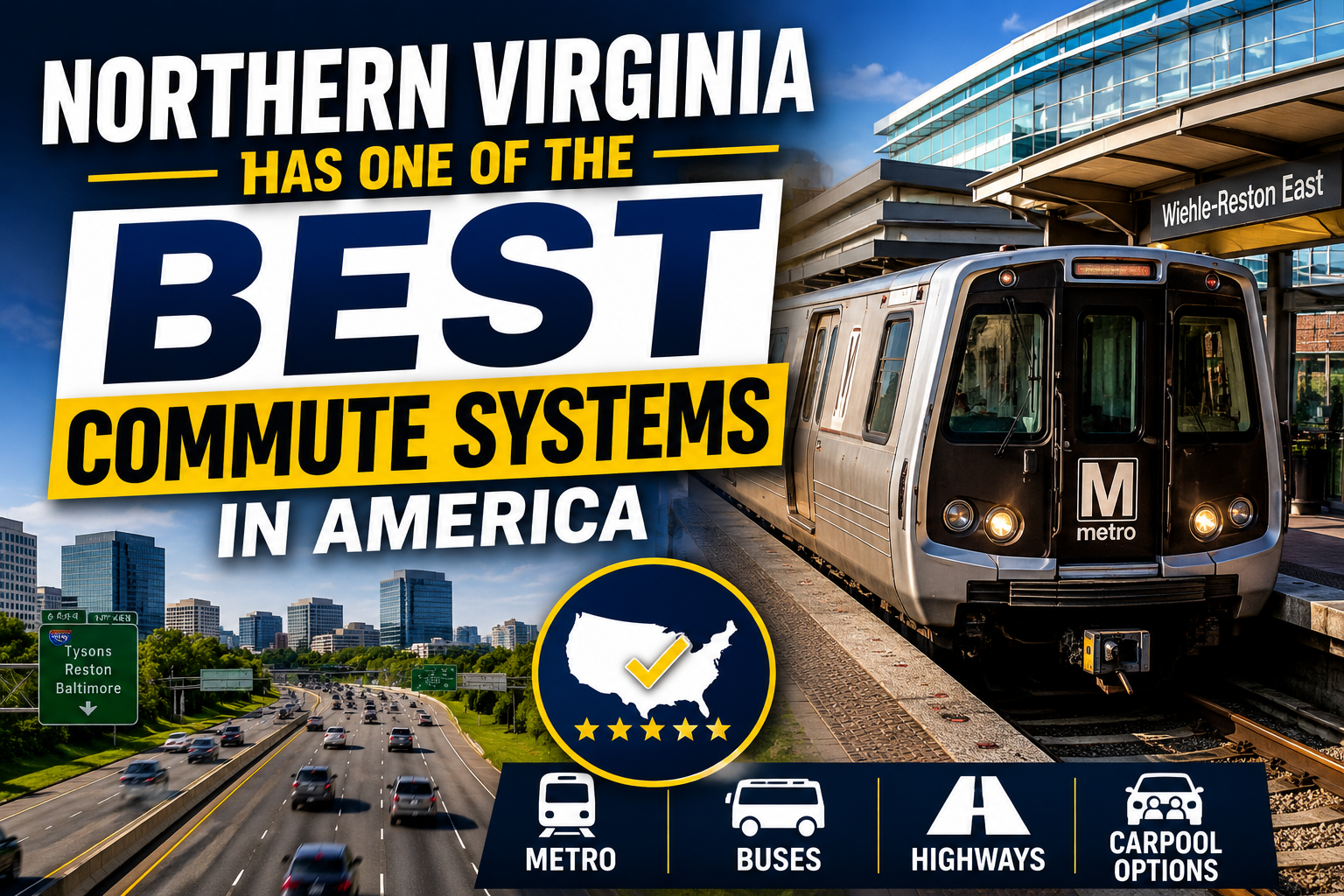
Northern Virginia is one of the strongest places to live in the country because it gives residents access to a deep regional commute system with Metro, buses, VRE commuter rail, express lanes, airports, bike trails, commuter lots, and walkable mixed use neighborhoods. This guide explains how Northern Virginia’s transportation network works, why the Washington DC metro area was recently ranked the No. 1 most livable metro in the United States, and how commute access impacts real estate demand across Fairfax County, Arlington, Alexandria, Loudoun County, Prince William County, and the broader DMV. If you are curious how commute access can affect your home’s value, start with a free home valuation or connect with Team DDA to talk about buying or selling in Northern Virginia.
The Washington DC metro area was recently named the most livable metro area in the country by RentCafe, with Travel and Leisure and Yahoo highlighting the ranking. The report ranked Washington DC first overall, first for quality of life, and first for location and community, pointing to wellness, revitalization, healthcare, educated residents, social organizations, cultural access, and professional networking as major strengths.
That matters for Northern Virginia because our region is not separate from DC’s livability story. Northern Virginia is one of the main reasons the DMV works. Residents can live in communities like Arlington, Alexandria, Falls Church, McLean, Vienna, Tysons, Reston, Herndon, Fairfax, Burke, Springfield, Lorton, Ashburn, and Woodbridge while still connecting to job centers, airports, universities, military installations, government offices, entertainment, and cultural destinations across the region.
Why commuting matters so much in Northern Virginia
In Northern Virginia, commute access is not a small lifestyle detail. It is one of the biggest factors buyers consider when choosing where to live.
A home’s location can feel completely different depending on whether it is close to:
• A Metro station
• A VRE station
• A Fairfax Connector route
• A Metrobus stop
• A DASH or ART bus route
• A commuter lot
• I 66, I 95, I 395, I 495, Route 50, Route 7, Route 28, or the Dulles Toll Road
• Dulles International Airport or Reagan National Airport
• A bike trail or walkable town center
That is why Northern Virginia’s commute system is such a real estate advantage. People here have options. Some residents ride Metro into DC. Some take VRE from Burke, Lorton, Manassas, or Woodbridge. Some use express buses from Prince William County. Some use commuter lots and carpool lanes. Some bike to work. Some live near mixed use centers and work from home several days a week. Some rely on access to Dulles, Reagan, or major employment hubs in Tysons, Arlington, Reston, Herndon, Alexandria, and Fairfax.
The strength of Northern Virginia is not one single commute option. It is the combination.
Metro is the backbone of the regional commute system
The Washington Metro system is one of the most important transportation assets in the entire DMV. WMATA says Metrorail now serves 98 stations and has 128 miles of track, while Metrobus serves the region with a large bus network across DC, Maryland, and Virginia.
For Northern Virginia residents, Metro access is especially important because multiple Metrorail lines serve the region:
• Orange Line for Vienna, Dunn Loring, West Falls Church, East Falls Church, Ballston, Virginia Square, Clarendon, Court House, and Rosslyn
• Silver Line for McLean, Tysons, Greensboro, Spring Hill, Wiehle Reston East, Reston Town Center, Herndon, Innovation Center, Dulles International Airport, Loudoun Gateway, and Ashburn
• Blue Line for Franconia Springfield, Van Dorn Street, King Street Old Town, Braddock Road, Potomac Yard, National Airport, Crystal City, Pentagon City, Pentagon, Arlington Cemetery, and Rosslyn
• Yellow Line for Huntington, Eisenhower Avenue, King Street Old Town, Braddock Road, Potomac Yard, National Airport, Crystal City, Pentagon City, and Pentagon
That means a buyer can choose very different lifestyles while still using the same regional rail network. Arlington offers walkable urban neighborhoods. Tysons offers high rise living and office access. Reston and Herndon offer suburban communities with direct rail to DC and Dulles. Alexandria offers historic charm with Metro access. Springfield offers a major transit hub with Metro, VRE, buses, and commuter routes.
The Silver Line changed the Northern Virginia commute map
The Silver Line is one of the biggest reasons Northern Virginia’s commute system has become even more powerful. The full extension to Dulles International Airport and Loudoun County opened in November 2022, connecting Metro riders directly to Washington Dulles International Airport and Ashburn for the first time.
That expansion changed how many people think about Reston, Herndon, Innovation Center, Dulles, Loudoun Gateway, and Ashburn. These communities now have direct access to the region’s rail network, which makes them more attractive to commuters, airport travelers, renters, buyers, employers, and developers.
For real estate, this is huge. Metro access can turn a suburban location into a connected regional hub. It can support apartment development, mixed use projects, walkable retail, office demand, and long term buyer interest.
The Silver Line also strengthens major Northern Virginia job centers. Tysons, Reston, Herndon, Dulles, and Ashburn are not just bedroom communities. They are employment centers, technology hubs, shopping destinations, and increasingly transit connected places to live.
Fairfax Connector fills in the local commute gaps
Metro is the backbone, but buses are what make the system more complete.
Fairfax Connector is the largest local bus system in Northern Virginia. Fairfax County says the system carries approximately 33,000 passengers daily across 90 routes, connecting people to neighborhoods, Metro stations, employment centers, schools, shopping, medical offices, and public services.
This is especially important because Fairfax County is large. Not every neighborhood is within walking distance of Metro. Fairfax Connector helps connect places like Reston, Herndon, Chantilly, Centreville, Vienna, Annandale, Springfield, Burke, Lorton, Mount Vernon, Tysons, and McLean into the larger regional transportation network.
For homeowners and buyers, bus access can matter in practical ways:
• It can help residents reach Metro without driving
• It can improve access for students, seniors, and workers
• It can reduce dependence on parking
• It can support local retail and employment centers
• It can make communities more accessible for people who do not want to drive every trip
A neighborhood does not need to sit directly on top of a Metro station to benefit from transit. Strong local bus connections can still improve mobility and convenience.
Arlington Transit makes car free and low car living easier
Arlington has one of the most transit friendly environments in Northern Virginia, and Arlington Transit, also known as ART, plays a big role. ART operates within Arlington County, supplementing Metrobus with cross county routes, neighborhood connections, and links to Metrorail and VRE.
This matters because Arlington’s real estate appeal is deeply tied to access. Rosslyn, Courthouse, Clarendon, Virginia Square, Ballston, Pentagon City, Crystal City, and Shirlington all benefit from a layered system of Metro, bus routes, bike infrastructure, walkable streets, and nearby employment.
For many buyers, Arlington offers the closest thing Northern Virginia has to a car optional lifestyle. That is a major reason homes and condos near transit corridors continue to command strong attention.
Alexandria’s DASH system is one of the best local bus stories in the region
Alexandria has also become a strong example of local transit access. DASH eliminated fares on all buses in September 2021, making local bus service free across Alexandria.
The city’s bus network connects riders to Old Town, Del Ray, Potomac Yard, Carlyle, Eisenhower Avenue, Van Dorn, King Street, Braddock Road, and other key areas. It also connects with Metro and other regional transit services.
For real estate, Alexandria’s transit system supports the city’s appeal as a place where people can live with more flexibility. Old Town offers walkability and charm. Potomac Yard has newer development and Metro access. Carlyle and Eisenhower offer office, retail, residential, and transit connections. DASH helps tie those pieces together.
VRE is a major advantage for longer distance commuters
The Virginia Railway Express, known as VRE, is a major commuter rail system for people traveling from outer Northern Virginia into Alexandria, Crystal City, L’Enfant Plaza, and Union Station. VRE says it provides commuter rail service from the Northern Virginia suburbs to Alexandria, Crystal City, and downtown Washington DC along the I 66 and I 95 corridors.
VRE operates two main lines:
• Manassas Line serving communities such as Broad Run, Manassas, Manassas Park, Burke Centre, Rolling Road, Backlick Road, Alexandria, Crystal City, L’Enfant, and Union Station
• Fredericksburg Line serving communities such as Spotsylvania, Fredericksburg, Leeland Road, Brooke, Quantico, Rippon, Woodbridge, Lorton, Franconia Springfield, Alexandria, Crystal City, L’Enfant, and Union Station
Fairfax County notes that there are five VRE stations in the county: Burke Centre, Rolling Road, Backlick Road, Lorton, and Franconia Springfield.
That gives communities like Burke, Springfield, Lorton, Woodbridge, Manassas, and Fredericksburg a meaningful commute advantage. VRE is especially valuable for people who work regular office schedules and want a rail alternative to sitting in I 95 or I 66 traffic.
OmniRide connects Prince William County and the outer suburbs
Northern Virginia’s commute system extends beyond Fairfax, Arlington, and Alexandria. OmniRide serves Prince William County, Manassas, Manassas Park, Stafford, Spotsylvania, Front Royal, Warrenton, and other areas with express commuter bus service to major employment centers in Northern Virginia and Washington DC.
This is important because the outer suburbs are often more affordable than close in markets, but commute access can make or break buyer interest. Express bus service gives many residents another option besides driving alone.
For real estate, this helps communities like Woodbridge, Gainesville, Manassas, Bristow, Haymarket, and Stafford compete for buyers who need regional access but also want more space or a different price point.
Express lanes and HOV options add another layer of flexibility
Northern Virginia is known for traffic, but it also has some of the most sophisticated managed lane systems in the country.
VDOT notes that the 495, 95, 395, and 66 Express Lanes are examples of high occupancy toll facilities in Northern Virginia. These lanes give drivers, carpools, vanpools, buses, and eligible HOV vehicles more options for predictable travel on some of the region’s busiest corridors.
For real estate, express lane access can influence buyer decisions, especially in communities near I 66, I 95, I 395, and the Beltway. A home in Centreville, Gainesville, Manassas, Springfield, Lorton, Woodbridge, Tysons, McLean, or Falls Church may become more attractive depending on how easily residents can access commuter routes.
Of course, express lanes do not eliminate traffic. But they add flexibility. In Northern Virginia, flexibility is valuable.
Airports are part of the commute story too
Northern Virginia has something many regions do not: direct or convenient access to two major airports.
• Washington Dulles International Airport in Loudoun and Fairfax County now has direct Silver Line access
• Ronald Reagan Washington National Airport is directly served by Metro on the Blue and Yellow Lines
This matters for residents who travel often for work, government, military, consulting, technology, international business, or personal travel. For buyers, airport access can be a serious lifestyle and career advantage.
A home in Arlington, Alexandria, Falls Church, McLean, Tysons, Reston, Herndon, Vienna, Ashburn, or Fairfax may carry extra appeal because of how efficiently residents can reach one or both airports.
Bike trails and walkability are part of the commute system
Northern Virginia’s commute system is not only trains, buses, and roads. Trails matter too.
The region has major multi use routes like:
• Washington and Old Dominion Trail
• Fairfax County Parkway Trail
For some residents, these trails are recreational. For others, they are commute routes. Bike access is especially meaningful in Arlington, Alexandria, Falls Church, Vienna, Reston, Herndon, and parts of Fairfax County where trails connect neighborhoods to Metro stations, office centers, shopping, and parks.
This is another reason transit rich real estate performs well. Buyers increasingly care about lifestyle. They want the ability to walk, bike, ride, drive, work remotely, and choose the commute that fits their day.
Northern Virginia’s best commute locations
Northern Virginia has many strong commute areas, but these stand out for different reasons.
Arlington
Arlington is one of the strongest commute locations in the entire region. The Rosslyn Ballston corridor offers Metro access, walkability, bus service, bike infrastructure, restaurants, offices, and direct proximity to DC. Crystal City and Pentagon City also benefit from Metro, airport access, Amazon related employment growth, and strong regional connectivity.
Alexandria
Alexandria offers Metro, DASH, VRE, Amtrak, bike trails, and proximity to both DC and Reagan National Airport. Old Town, Del Ray, Potomac Yard, Carlyle, Eisenhower Avenue, and Kingstowne all appeal to different types of commuters.
Tysons and McLean
Tysons has transformed from a car heavy office and retail district into a major Silver Line connected employment and residential hub. McLean and nearby areas benefit from proximity to Tysons, DC, the Dulles Toll Road, I 495, and Metro.
Vienna and Dunn Loring
Vienna and Dunn Loring have long been popular because of Orange Line access, established neighborhoods, Fairfax County schools, parks, and proximity to Mosaic District, Merrifield, Tysons, and Fairfax.
Reston and Herndon
Reston and Herndon became even stronger with the Silver Line extension. These areas offer Metro access, office centers, trails, shopping, dining, town center style development, and a more suburban feel than Arlington.
Falls Church
Falls Church benefits from Orange Line access, proximity to the Beltway, strong local retail, walkability in key areas, and access to both Arlington and Fairfax County job centers.
Burke and Springfield
Burke and Springfield are strong for commuters who use VRE, Metro, buses, I 95, I 395, the Beltway, or the Fairfax County Parkway. Burke Centre VRE and Franconia Springfield’s multimodal hub are major advantages.
Lorton and Woodbridge
Lorton and Woodbridge are important for VRE and I 95 commuters. These areas can appeal to buyers seeking more space while still maintaining access to rail and express lanes.
Ashburn and Loudoun County
Ashburn now has direct Metro access through the Silver Line, plus proximity to Dulles, Route 28, data center employment, and Loudoun County growth. The commute equation has changed significantly for eastern Loudoun.
How commute access impacts home values
Commute access has a real impact on housing demand.
Freddie Mac studied the DC Metro area and found that the sales price premium for a typical house was highest within a quarter mile of a Metro station and declined as distance increased. The study showed that proximity to Metro can be worth a meaningful price premium, especially in certain neighborhoods and price ranges.
That makes sense. Transit access saves time, adds flexibility, reduces dependence on driving, and expands the number of buyers who may consider a property.
Metro also says transit oriented development can create accessible neighborhoods with amenities, lower car ownership, and household savings compared with car dependent living.
For sellers, this means commute access should be part of the marketing story. A listing near Metro, VRE, a strong bus route, a commuter lot, a bike trail, or a major employment center should not bury that information. It should highlight it clearly.
For buyers, this means the cheapest home is not always the best value if the commute is painful. A slightly higher purchase price in a better connected location may offer long term lifestyle value and stronger resale appeal.
Transit oriented development is reshaping Northern Virginia
Transit access is not only changing individual home values. It is changing entire neighborhoods.
Northern Virginia has seen major growth around transit connected areas such as:
• Rosslyn
• Courthouse
• Clarendon
• Ballston
• Pentagon City
• Crystal City
• Potomac Yard
• Tysons
• Dunn Loring
• Mosaic District
• Reston Town Center
• Herndon
• Innovation Center
• Ashburn
• West Falls Church
WMATA says it actively works to create transit oriented real estate development and communities around stations through its Joint Development Program, with goals that include generating new ridership, improving station access, supporting local economic development, and increasing tax revenue.
This is a major reason buyers like Northern Virginia. The region offers established single family neighborhoods, but it also offers newer mixed use areas where residents can live near coffee shops, restaurants, grocery stores, offices, parks, gyms, and transit.
That variety is one of Northern Virginia’s biggest strengths.
Why Northern Virginia’s commute system helps the region compete nationally
The Yahoo and Travel and Leisure article focused on the Washington DC metro area’s No. 1 livability ranking, and transportation is a big part of what makes that livability possible even when it is not the only ranking factor.
A strong region needs more than jobs. It needs access. Northern Virginia gives residents access to:
• Federal government jobs
• Defense and military employers
• Technology companies
• Consulting firms
• Healthcare systems
• Universities
• Airports
• Cultural attractions
• Parks and trails
• Shopping and dining
• DC, Maryland, and Virginia job centers
That access is why Northern Virginia remains one of the most resilient and desirable real estate markets in the country.
The commute system is not perfect, but it is powerful
It is important to be honest. Northern Virginia still has traffic. Some bus routes run less frequently than people would like. Some areas are much more car dependent than others. Metro service can be affected by maintenance, construction, and funding challenges. Express lanes can be expensive depending on the trip. Long commutes are still a reality for many residents.
But compared with many parts of the country, Northern Virginia offers an unusually deep set of options.
You can ride rail. You can take a bus. You can drive. You can carpool. You can use express lanes. You can bike. You can work near Metro. You can fly from Dulles or Reagan. You can live in a walkable corridor or a quieter suburban neighborhood with access to transit.
That choice is the advantage.
What buyers should consider when choosing a commute location
If you are buying in Northern Virginia, do not just ask, “How far is it from work?”
Ask better questions:
• How long is the commute during the actual hours I travel?
• Is there Metro access nearby?
• Is there a VRE station nearby?
• Is there a reliable bus route?
• Is there a commuter lot?
• Are there HOV or express lane options?
• Can I reach an airport easily?
• Can I walk or bike to daily needs?
• How will this commute feel three years from now?
• Will future buyers value this location too?
A smart real estate decision looks beyond mileage. In Northern Virginia, a 10 mile commute can be harder than a 25 mile commute depending on the corridor, transit options, and timing.
What sellers should highlight when marketing a home
If you are selling in Northern Virginia, commute access can be one of your strongest selling points.
Depending on the home, a strong listing strategy should highlight:
• Distance to the nearest Metro station
• VRE access
• Bus routes nearby
• Commuter lot access
• Proximity to I 66, I 95, I 395, I 495, Route 50, Route 7, Route 28, or the Dulles Toll Road
• Access to Tysons, Reston, Arlington, Alexandria, DC, Fort Belvoir, the Pentagon, Dulles, or Reagan
• Nearby bike trails
• Walkability to shopping, coffee, restaurants, gyms, and parks
• Remote work friendly features for hybrid commuters
The buyer is not only buying the home. They are buying the daily routine.
Final thoughts
Northern Virginia has one of the most impressive commute systems in America because it combines Metro, VRE, local buses, express commuter buses, managed lanes, airports, bike trails, walkable mixed use centers, and major employment hubs into one connected regional network. The Washington DC metro area’s No. 1 livability ranking reinforces what many local residents already know: this region offers an unusually strong mix of opportunity, culture, access, and quality of life. From a real estate perspective, commute access is one of the biggest drivers of buyer demand and long term home value in Northern Virginia. Whether someone wants a walkable condo near Metro, a townhome near VRE, a single family home with strong highway access, or a suburban community with bus and trail connections, Northern Virginia gives buyers more ways to live, work, and move.

WHY CHOOSE TEAM DDA FOR REAL ESTATE IN NORTHERN VIRGINIA?
When you are buying or selling a home in Northern Virginia, the Realtor you choose matters. You need more than someone who can open doors or put a sign in the yard. You need a trusted real estate team with proven results, deep local knowledge, strong negotiation skills, and a track record of helping clients move with confidence.
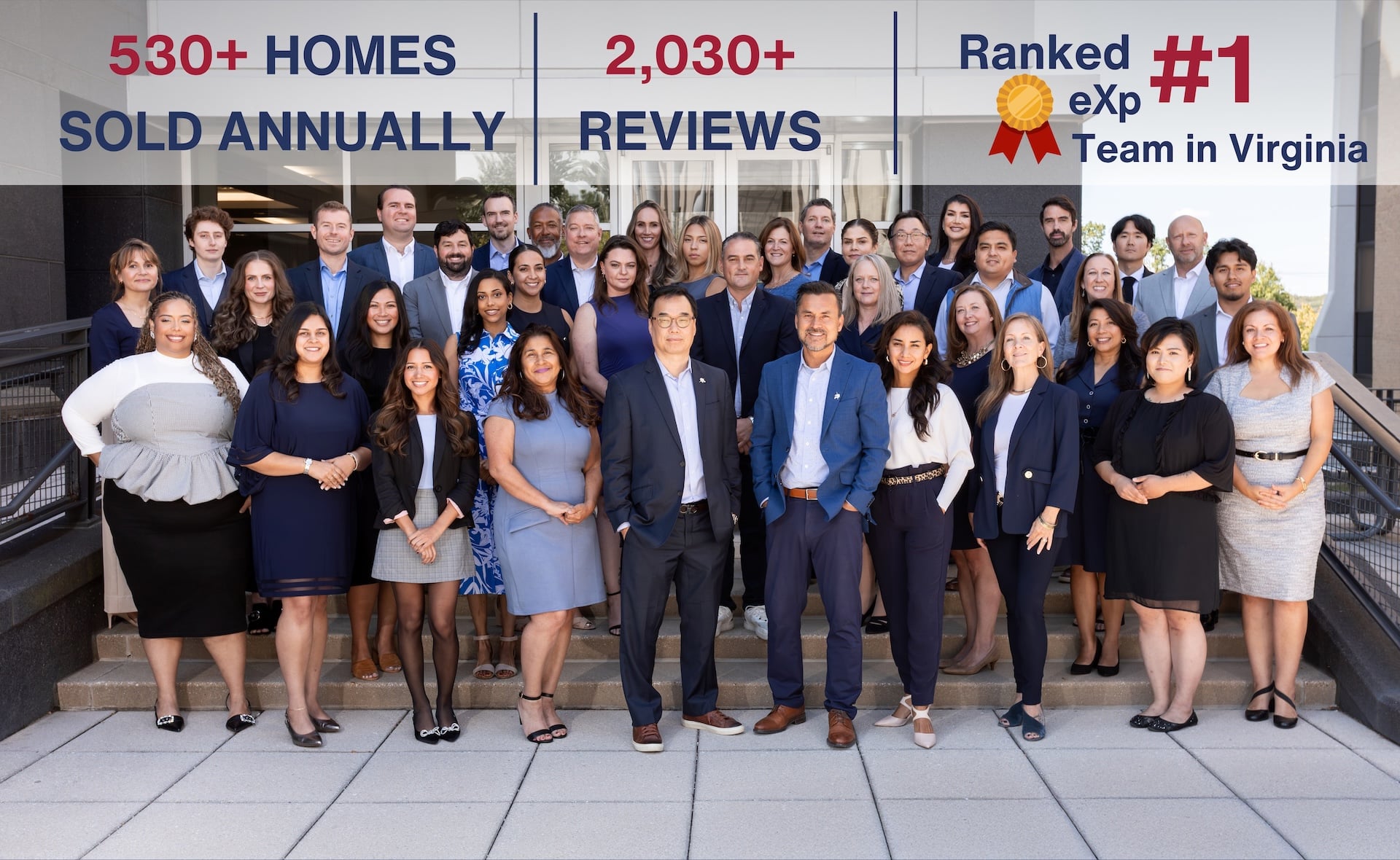
Debbie Dogrul Associates, also known as Team DDA, is one of Northern Virginia’s most trusted real estate teams and the number one eXp Realty team in Virginia. For decades, our full-service team has helped families buy, sell, relocate, invest, and make smart real estate decisions across Fairfax County and the surrounding Northern Virginia region.
With over 540 homes sold annually, nearly $400 million in 2025 sales volume, and 2,030 plus five-star reviews, Team DDA delivers the kind of experience, strategy, and results today’s buyers and sellers deserve.
A TOP NORTHERN VIRGINIA REAL ESTATE TEAM WITH PROVEN RESULTS
Choosing the right real estate agent can make a major difference in your final outcome. For sellers, that can mean stronger marketing, better pricing, more qualified buyers, and a smoother path to closing. For buyers, it can mean finding the right home, writing a competitive offer, avoiding costly mistakes, and understanding the local market before making a move.
Team DDA brings together more than 35 full-time, highly trained Realtors who specialize in helping clients throughout Northern Virginia. Our team approach gives every client access to local market expertise, professional marketing, negotiation strategy, transaction support, staging guidance, vendor connections, and clear communication from start to finish.
Whether you are looking for the best Realtor in Fairfax County, a top real estate agent in Northern Virginia, or an experienced team to help you sell your home, Team DDA has the systems, people, and local experience to guide you with confidence.
LOCAL EXPERTISE ACROSS FAIRFAX COUNTY AND NORTHERN VIRGINIA
Real estate is local. Pricing, buyer demand, school boundaries, commute patterns, neighborhood amenities, and even street-by-street trends can all affect your home’s value and your buying power.
Team DDA proudly serves communities throughout Northern Virginia, including:
Fairfax, Burke, Annandale, Springfield, Alexandria, Arlington, Reston, Herndon, McLean, Tysons, Vienna, Falls Church, Oakton, Fairfax Station, Woodbridge, Centreville, Chantilly, Ashburn, Loudoun County, Prince William County, and surrounding areas.
Our agents understand the neighborhoods, housing styles, market trends, and buyer expectations that shape each local community. Whether you are selling a single-family home in Burke, buying a townhouse in Springfield, relocating to Fairfax, searching for a luxury home in McLean, or preparing to list a property in Reston, our team provides hyperlocal guidance tailored to your goals.
HELPING NORTHERN VIRGINIA SELLERS GET BETTER RESULTS
Selling a home in Northern Virginia takes more than uploading photos online. It requires accurate pricing, strategic preparation, strong presentation, professional marketing, expert negotiation, and a clear plan from day one.
Team DDA helps sellers maximize their home’s value through:
• Local pricing strategy based on real market data
• Professional staging guidance and home preparation advice
• High-quality photography and marketing exposure
• Digital marketing designed to reach serious buyers
• Skilled negotiation to protect your equity
• Clear communication throughout the selling process
• Full-service transaction support from listing to closing
Our goal is simple. We help you sell with confidence, reduce stress, and position your home to stand out in the Northern Virginia market.
HELPING BUYERS MAKE SMART MOVES
Buying a home in Northern Virginia can be competitive, especially in sought-after areas like Fairfax, Burke, Vienna, Arlington, Alexandria, McLean, Reston, and Falls Church. Having the right buyer’s agent can help you move quickly, understand market value, write a stronger offer, and avoid surprises along the way.
Team DDA helps buyers with:
• Local neighborhood guidance
• Home search strategy
• Market value analysis
• Offer preparation and negotiation
• Inspection and contingency guidance
• Lender and vendor recommendations
• Closing support and next-step planning
Whether you are a first-time homebuyer, moving up, downsizing, relocating, or investing, our team helps you make informed decisions every step of the way.
WHY CLIENTS SEARCH FOR TEAM DDA
Many clients find us while searching for terms like best Realtor near me, top real estate agent in Fairfax VA, Northern Virginia real estate team, Fairfax County Realtor, Realtor in Burke VA, real estate agent in Springfield VA, top Realtor in Arlington VA, best listing agent in Northern Virginia, or trusted Realtor near Tysons.
But what keeps clients choosing Team DDA is not just search visibility. It is our reputation, our results, and the way we care for people throughout the entire process.
Our clients trust us because we combine professional systems with personal service. We know how important your move is, and we treat it with the attention, preparation, and strategy it deserves.
A REAL ESTATE TEAM BUILT ON SERVICE AND COMMUNITY
At Team DDA, success is about more than homes sold. It is also about giving back to the communities that have supported us for decades.
Through the DDA Love Foundation, Team DDA supports local families, students, nonprofits, and community organizations throughout Northern Virginia and beyond. In 2025, our team partnered with Palmetto International Missions to help build 15 homes in a village in Honduras and awarded scholarships to five local high school seniors. In total, Team DDA contributed more than $100,000 in community giving.
Our outreach also includes food drives for Food for Others, support for The Lamb Center, Thanksgiving meal distributions, Adopt a Family programs, clothing drives, blood drives with Inova, community cleanup days, and other local service initiatives.
We believe real estate is about people, families, neighborhoods, and futures. That belief shapes how we serve our clients and how we show up for our community.
WORK WITH ONE OF NORTHERN VIRGINIA’S MOST TRUSTED REAL ESTATE TEAMS
If you are thinking about buying or selling a home in Northern Virginia, Team DDA is here to help you move forward with clarity and confidence.
From Fairfax County to Arlington, Alexandria, Loudoun County, Prince William County, and the surrounding communities, Debbie Dogrul Associates brings the experience, local knowledge, marketing power, and personal care you need when it matters most.
Whether you are searching for the best Realtor near you, preparing to sell your home, or looking for expert guidance in today’s Northern Virginia real estate market, Team DDA is ready to help.
Contact Team DDA today to start your next move with one of Northern Virginia’s top real estate teams.
Check out this article next